
Dumbing Down the Lesson
Subbing Therapy and Life Tips for Theology

I would like to thank my friend
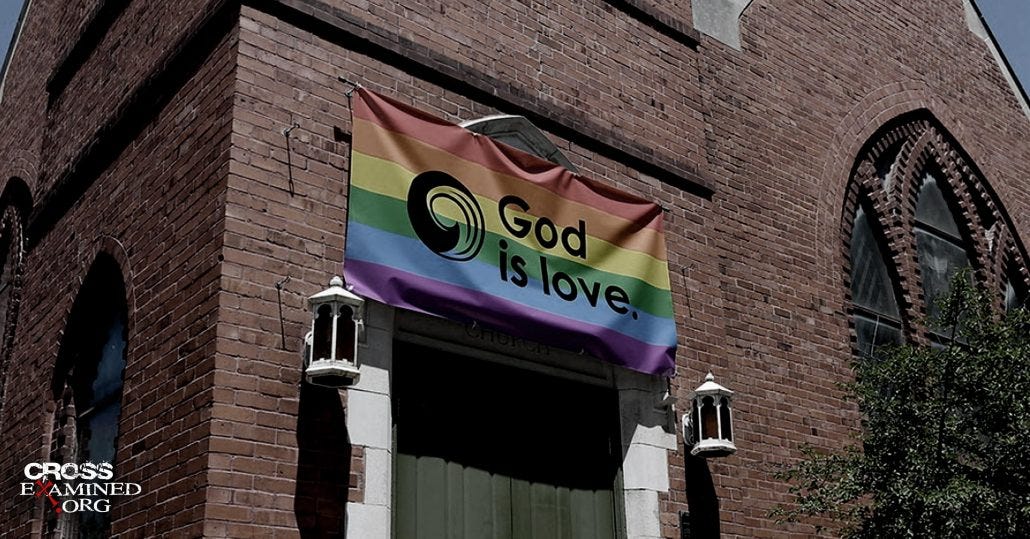
for the subtitle for this piece, and if you aren’t already subscribed to him you really should be! Now to jump right in…I have been attending church with my daughter the past couple of Sundays. She sings in the choir at her mother’s church, which is in the Presbyterian Church (U.S.A) denomination. Not to be confused with the Presbyterian Church in America (PCA), both of which I’ve written about previously1. It is a gorgeous old church built in the 1870’s; and everyone who attends is super nice and most have gone out of their way to approach me and welcome me. I sincerely appreciate it. I feel to some extent (whether it be real or just perceived) as if I stick out like a sore thumb. It is a very progressive church (I believe the whole reason my ex chose to start attending this church a few years ago was because of the lesbian pastor), and no matter how much I might try not to I really can’t help but give off a very conservative vibe. I’m not sure what gives me away more; the jeans with cowboy boots, the plaid collared shirt with a sports coat, the very old leather Bible and a notebook tucked under my arm, or the bulge of the Bersa Thunder 380 in the small of my back… but whatever it is, I tend to stand out. But the services are lovely! The choir director, those singing, and the selections for each service are amazing. And as I said before, the church building is incredible and the people have all been nothing but incredibly kind. I just wish I was getting something out of the messages…
For the past 8+ years I have been attending either an evangelical non-denominational church, or a gospel oriented General Baptist church, and on occasion I’ll go back home to visit with my parents and attend their rural Methodist church. The scripture readings and sermons have done two things in particular at all of these churches I’ve been attending: 1. They avoid getting political, and 2.) They dig deep into the scriptures and look at context throughout the entire Bible and what goes on in the world as it pertains to the text. In the two weeks I’ve been attending this particular PCUSA, I’ve heard politics brought front and center once, and had it be a side note on a couple other occasions, and I have yet to get anything of particular depth from the lessons.
I’m going to keep this writing a bit shorter because I want to actually dig in to the scripture and lesson from this past Sunday a little more in-depth in another piece, but I really wanted to touch on my takeaways from the past couple weeks in my first real experience with a progressive church in about a decade. The primary thing I’ve noticed about the lessons of the past couple of weeks is how juvenile they are, from a theological standpoint. They touch on some very baseline, simplistic messages of the text itself without actually probing for any of the depth or context of the scripture. They don’t explore what came before or after in the book/chapter the text comes from. They don’t tie it in with other teachings of Jesus or Paul or the disciples or how it all connects through the stories of the New Testament. Nothing gets tied back to the prophecies of the Old Testament or why some of the things being discussed are worded and done the way they are or the traditions of the day and time and place that it’s all set in. The two main “takeaways” I’ve gotten in my notes from the past two weeks were “ask God the hard questions” and “whoever is not against us is for us.” Which are both beyond oversimplified, but they’re literally the words of the pastor, from the pulpit. The rest of my notes are my own breakdowns and dissections of the scriptures themselves and going through where the pastor has breezed over important points or mischaracterized others so as to avoid hard conversations some of the passages should be eliciting in the congregations’ mind. The Bible is not a series of lines and verses and chapters to be singled out for some feel-good purpose of a message here and there. It’s a collective and connective document that ties together, both forward and backward, to tell the tale of Jesus and our salvation and how we should be working for God’s kingdom.
I’ve got notebooks with my Sunday message notes going back something like 15 years. I can read what I was thinking and taking away from the messages, what lessons and purpose the pastor was bringing to the scripture, what was being covered and all of the different text that connect to it that either the pastor listed or what I found for myself from almost every Sunday I’ve been in church since roughly 2010. The last time I attended what I would consider to be a “progressive church” was when I lived in Pennsylvania and worked in New Jersey for a little over a year from 2014-2015. It was the closest United Methodist Church to the apartment that I was living in, and similar to the Presbyterian Church here it was an old, gorgeous building and all of the members were incredibly nice to this young southern farm boy who was living way out of his comfort zone and just looking for a church to go to on Sundays. My notes from those Sundays for the course of that year are very light on lessons and heavy on my own reading and understanding of scriptures being covered each week.
I think progressive “christianity” seems to have an aversion to digging deeper in to the scriptures, the connectivity of the Bible and its lessons, and theology as a whole. It’s light on depth and heavy on feeling good about being a good person. As Kruptos said it when I was asking him about this topic, “No more theology, but rather therapy and life tips.” In my next entry I’ll be looking more at the scripture of Mark 9:38-50 and digging in to the message as it was covered, and what I consider to be the more in-depth lessons that can be taken from Jesus’s words both in those verse and throughout the rest of his teachings in the gospels.
Fixing What's Wrong with the Church - by Justin Campbell (substack.com)